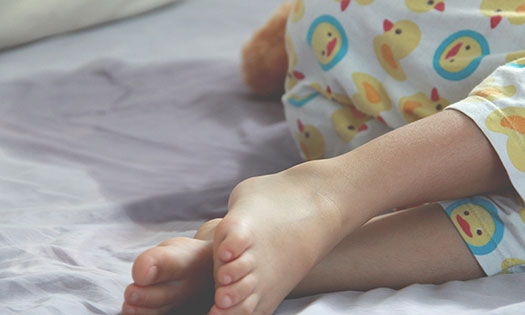
If your child has been dry for weeks — or even months — and then wets the bed the same night they come down with a fever or stomach bug, you are not imagining a connection. Bedwetting when ill is genuinely more common, and there are clear physiological reasons why sickness can trigger wet nights. This article explains what is happening, what to expect, and how to manage it without derailing any progress your child has made.
Why Illness and Bedwetting Are Connected
The relationship between being unwell and wetting the bed is not random. Several distinct mechanisms are at work, and they often overlap during the same illness.
Fever and fluid imbalance
When a child has a fever, the body attempts to cool itself through sweating and faster breathing. This increases fluid loss — but many children drink less when they feel unwell. The net result is often mild dehydration during the day, followed by a paradoxical surge in urine production at night as the body attempts to rebalance. The kidneys may produce more dilute urine once fluid intake resumes in the evening, increasing overnight bladder load at exactly the wrong time.
Disrupted ADH production
Under normal circumstances, the body produces antidiuretic hormone (ADH) in higher quantities during sleep, which suppresses urine production overnight. Illness — particularly anything involving fever, inflammation, or significant physiological stress — can disrupt this hormonal pattern. If ADH release is blunted or mistimed, urine production does not slow as expected, and the bladder fills more than usual during the night.
Deep, heavy sleep
Children often sleep more deeply when ill. The brain is less responsive to bladder signals when sleep is unusually heavy, meaning a child who would normally rouse — or at least shift position — may not register the need to wake. This is the same mechanism thought to underlie bedwetting in children who are generally deep sleepers. Illness simply amplifies it temporarily.
Medication effects
Some common medications given during childhood illness can affect bladder function or sleep depth. Antihistamines used for colds or allergic reactions are sedating and can deepen sleep. Some antibiotics affect gut and bladder flora. If your child is wetting more since starting a new medication, that is worth flagging — there is a full discussion in My Child Is Wetting More Since Starting a New Medication: What to Do.
Urinary tract infections
A UTI is a specific illness-related cause that deserves separate mention. Bladder infections cause urgency and frequency that can easily result in overnight wetting — including in children who are reliably dry. If wetting is accompanied by complaints of pain or burning when urinating, unusual-smelling or cloudy urine, or more frequent toilet trips during the day, a UTI should be ruled out via a GP appointment. This is not something to manage at home and wait out. For more on symptoms worth investigating, see My Child Is in Pain When They Wet: What This Could Mean.
Is This Secondary Bedwetting?
If your child had been dry and has now started wetting during or after an illness, this technically falls under the category of secondary nocturnal enuresis — bedwetting that returns after a period of dryness of at least six months. Most illness-triggered wetting resolves once the child recovers, and brief relapses of this kind are common and expected. They do not indicate regression or a long-term problem.
However, if wetting continues for more than two to four weeks after the illness has passed, it is worth reviewing. Occasionally an illness reveals an underlying vulnerability — for instance, a UTI that has partially resolved but is still affecting the bladder, or a period of illness that has coincided with a growth spurt or other physiological change. If dryness does not return, a GP conversation is the right next step.
Secondary bedwetting with a clear trigger — such as a stressful event rather than illness — follows a similar pattern and is covered in Bedwetting Started After a Stressful Event: Is It Linked and Will It Stop?
What to Do During the Illness
Managing wet nights when a child is unwell is primarily about practical protection and keeping the experience as low-stress as possible.
Protection
- Reinstate whatever worked before. If your child previously used a pull-up or pad and has since stopped, putting one back in place during illness is entirely sensible. There is no shame in it, and it avoids the additional disruption of multiple night changes on top of managing an unwell child.
- Mattress protection. If you have removed a mattress protector, put it back. If you never had one, a waterproof bed pad under the fitted sheet is the quickest option.
- Double-make the bed. Layer: waterproof pad, sheet, waterproof pad, sheet. If one set is wet, stripping back to the dry layer underneath is much quicker than a full bed change at 2am with a feverish child.
Fluid management
The instinct to restrict fluids in an attempt to prevent wetting is understandable but counterproductive, particularly during illness. Children who are unwell need adequate hydration. Restricting fluids risks worsening dehydration, which can actually increase the rebound urine surge later. The more useful approach is to front-load fluids earlier in the day and avoid large drinks in the final hour before bed — but never to withhold fluids from an unwell child.
Keeping it calm
Children who have recently become dry often feel embarrassed or frustrated when they wet during illness, particularly if they understand that they had “got past it.” Framing it clearly — “your body is busy fighting the illness, it’s not unusual for this to happen, it will settle down” — is accurate and helpful. You do not need to make it a big moment. The guidance in How to Talk About Bedwetting Without Shame or Embarrassment applies equally well to temporary relapses.
After the Illness: Getting Back on Track
In most cases, wetting returns to its pre-illness pattern within a week or two of full recovery. If your child was using a bedwetting alarm or desmopressin prior to the illness, the general advice is to resume the previous approach once they are well. There is no need to restart a full programme from scratch for a temporary relapse.
If progress had been going well and the illness has set things back more significantly — for instance, confidence has taken a knock, or the child is now reluctant to return to sleeping without protection — that is worth addressing gently. Children sometimes internalise a relapse as failure. It is not. The body responded to illness in a predictable way. That is the whole message.
When to See a GP
Most illness-related bedwetting does not need medical attention beyond treating the underlying illness. However, contact a GP if:
- Wetting is accompanied by pain, burning, or discomfort when urinating
- The urine looks cloudy or has an unusual smell
- Your child is drinking significantly more than usual (this can be a sign of something requiring investigation)
- Wetting continues for more than three to four weeks after recovery
- The frequency or volume of wetting has changed substantially compared to before the illness
For a broader view of which symptoms warrant a GP visit, When Is Bedwetting a Problem? Signs It’s Time to Talk to a Doctor covers the full picture.
The Short Version
Bedwetting when ill is common, explainable, and almost always temporary. Fever disrupts fluid balance, illness can suppress ADH production, and deep restorative sleep reduces the brain’s responsiveness to bladder signals. Put the protection back in place, keep fluids up during the day, and do not treat the relapse as a setback — because in most cases, it is not one. If wetting continues well beyond recovery, or is accompanied by pain or other symptoms, that is the point to involve a GP.