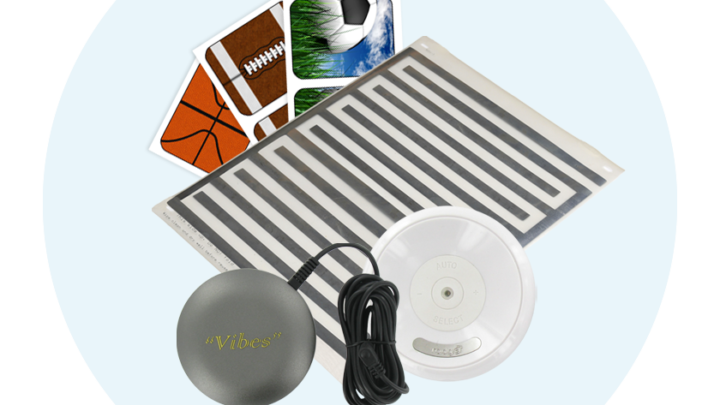
If you’re looking at the TherALARM bedwetting alarm and wondering whether it’s worth buying, this review covers what it is, how it works, what parents actually report, and where it sits relative to other options. No fluff — just what you need to make a decision.
What Is the TherALARM?
The TherALARM is a wearable bedwetting alarm manufactured by Therapass, a UK-based company. It uses a small moisture sensor clipped to the child’s underwear or pull-up, connected by a wire to an alarm unit worn on the wrist or clipped to a pyjama collar. When moisture is detected, the unit sounds an audible alarm and vibrates.
It is available without prescription and is widely sold through UK pharmacies, online retailers, and directly from the manufacturer. The NHS sometimes recommends alarm therapy as a first-line treatment for nocturnal enuresis in children over five — the TherALARM is one of the products that falls within that category.
Who Is the TherALARM Designed For?
Bedwetting alarms in general are most effective for children who:
- Are aged five or older and motivated to become dry
- Have primary nocturnal enuresis (never reliably dry at night) or secondary enuresis (was dry, then started wetting again)
- Have caregivers who can support a consistent programme over eight to twelve weeks
- Do not have an underlying medical condition driving the wetting
Alarm therapy is less appropriate — or needs adaptation — for children who are deep sleepers to the point of never waking, children with sensory sensitivities who find alarms distressing, and children who are not yet ready or willing to engage. If you’re unsure whether your child is at the right stage, the Bedwetting by Age guide covers what’s developmentally expected at different points.
TherALARM: Key Features
Sensor and connectivity
The sensor is a small clip-on unit that attaches directly to the child’s underwear gusset. It detects moisture rapidly — generally within seconds of wetting starting. The wire runs up to the alarm body. This wired design is less sophisticated than some wireless alarms but is more reliable in terms of signal consistency, and there are no batteries to replace in the sensor unit separately.
Alarm types
The TherALARM combines both sound and vibration. The audible alarm is loud enough to wake most children, and the vibration adds a secondary stimulus. This dual-mode activation is useful because some children habituate quickly to sound alone. Parents can also hear the alarm from an adjacent room, which matters in the early weeks when the child typically needs adult help to fully wake and respond.
Size and wearability
The alarm unit is compact — broadly comparable to a wristwatch in terms of weight and bulk. The wrist-worn option is generally better tolerated than collar-clip alarms for children who move around at night, as it is less likely to detach. Children with sensory sensitivities may find the wrist strap uncomfortable; this is worth testing before committing to regular use. For ASD or sensory-processing concerns, texture and fit are legitimate deal-breakers — more on that below.
Build quality
The unit is solidly built for the price point. The sensor wire is a common weak point in wired alarms generally — it can wear at the connection points if not handled carefully. The TherALARM’s wire has reasonable flexibility, but parents should avoid sharp bends or tension at the plug points.
Does the TherALARM Actually Work?
This question is better answered at the category level than the product level. Bedwetting alarm therapy overall has a strong evidence base. A Cochrane review of enuresis alarms found that roughly two-thirds of children achieved dryness during alarm use, with roughly half maintaining dryness after stopping. That makes alarms one of the most effective non-medication interventions available.
The TherALARM performs comparably to other wired alarms at its price point. It is not meaningfully better or worse than the Rodger Wireless or Malem alarms on effectiveness data — the evidence base does not distinguish significantly between compliant alarm brands. What differs is usability, tolerance, and whether the child will actually wear it consistently.
The critical variable with any alarm is programme adherence. Eight to twelve weeks of consistent use is typically required. If the alarm is removed after two weeks because it’s disruptive, or the child removes it during the night, results will be poor regardless of the device. If you’re already in that situation, this guide on children who sleep through the alarm covers every practical strategy.
Specific Considerations for Sensory and Neurodivergent Children
For children with autism, ADHD, or sensory processing differences, alarms introduce specific challenges:
- Sound sensitivity: A sudden loud alarm can be genuinely distressing rather than merely disruptive. The vibration-only mode (if the alarm supports it) may be preferable — the TherALARM’s dual function allows some adjustment, though full vibration-only operation should be confirmed with the manufacturer.
- Wrist tolerance: Some children will not tolerate anything on their wrist overnight. Testing with a low-stakes wristband first can indicate whether this is likely to be a problem.
- Motivation: Alarm therapy relies on a degree of child engagement. For children who do not connect the alarm stimulus to a desired outcome, the conditioning mechanism is less effective.
None of this disqualifies alarm use — it means the approach may need more preparation and a longer adjustment period. It is also worth knowing that for some children, protective products remain the more practical solution indefinitely, and that is a legitimate outcome. The goal is sleep quality and dignity, not a specific pathway.
TherALARM vs Alternatives: Quick Comparison
TherALARM vs Malem alarms
Malem is the most established UK bedwetting alarm brand and is often the default NHS recommendation. The Malem Ultimate and Malem wearable alarms are broadly comparable to the TherALARM in function. Malem also offers a wireless option. The TherALARM is generally slightly lower in price; Malem has a longer track record and wider availability of replacement parts.
TherALARM vs Rodger Wireless
The Rodger Wireless uses sensor pants rather than a clip-on sensor, which removes the wire entirely and is better tolerated by some children. It is significantly more expensive. If wire tolerance is a concern, Rodger is worth considering despite the higher cost.
TherALARM vs DryEasy / budget alternatives
There are cheaper alarm options on the market, primarily from Asian manufacturers sold via Amazon. Build quality and sensor reliability are more variable. The TherALARM represents a reasonable mid-point — not the cheapest, not the premium option.
Practical Setup Tips
- Involve the child in setting up the alarm and explain exactly what will happen. Surprise activations are more distressing than anticipated ones.
- Keep a simple wet/dry log. Progress in alarm therapy is rarely linear — a log prevents parents from relying on memory and helps identify patterns.
- In the early weeks, plan to go to your child when the alarm sounds. The goal is for them to eventually wake independently, but this develops over time.
- If the alarm triggers and the child has already voided fully, that is expected and normal in the first weeks. The conditioning effect takes time.
- Protect the bed regardless — a mattress protector and waterproof fitted sheet are still sensible during alarm use.
It’s also worth being honest about the household impact. Alarms wake parents too, often repeatedly. If you’re already running on empty, this piece on managing night exhaustion is worth reading before you start.
When the TherALARM Is Not the Right Choice
The TherALARM — like all alarms — is not appropriate as a standalone solution for every situation. Consider alternatives or additional support if:
- Your child is under five
- Wetting is very infrequent (fewer than two or three nights per week) — alarm therapy is less effective for low-frequency wetting
- There is a suspected underlying medical or neurological cause — see a GP before starting alarm therapy
- Your child has already completed a full alarm programme without success — this guide covers next steps after two failed alarm attempts
- The family cannot sustain eight to twelve weeks of disruption at this point
Verdict: Is the TherALARM Worth Buying?
The TherALARM bedwetting alarm is a competent, reasonably priced wired alarm that does what it claims to do. It is not a premium device, but it is reliable enough for a full alarm programme and is well suited to families trying alarm therapy for the first time.
Its dual sound-and-vibration activation is a genuine advantage. The wired design is a minor limitation for some children but not a significant one. At its price point, it represents good value compared to budget alternatives without the premium cost of wireless options.
If your child is motivated, you have the bandwidth to support eight to twelve consistent weeks, and there is no underlying condition to investigate first, the TherALARM is a reasonable choice. If alarm therapy has already failed or circumstances make a prolonged programme impractical, protective products — from pull-ups to taped briefs — are entirely valid alternatives, and there is no hierarchy between the two approaches.
Whatever route you take, the most useful thing you can do right now is be clear about your goal — dry nights through conditioning, or managed comfortable sleep — and choose the tool that fits that goal. Both are legitimate.
—