If you’re weighing up a wireless bedwetting alarm against a standard wired model, you’re probably asking one straightforward question: is the price difference actually justified? The answer depends less on the alarm and more on your specific setup at home — but there are clear situations where wireless alarms earn their keep, and others where they don’t.
How Wireless Bedwetting Alarms Differ From Wired Models
A standard wired bedwetting alarm consists of a moisture sensor worn in or clipped to the underwear or nightwear, connected by a short cable to a small receiver unit — usually clipped to the shoulder or collar. When moisture is detected, the receiver sounds an alert or vibrates. The whole unit stays on or very close to the child.
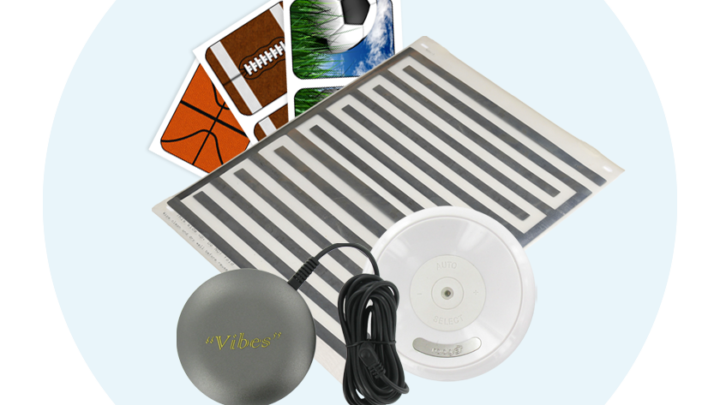
A wireless alarm separates these two components. The sensor detects moisture and transmits a signal to a receiver placed elsewhere — on a bedside table, in the parents’ room, or both. Some systems include a wearable component that also alerts the child, while others rely entirely on a remote receiver. The physical connection between sensor and alarm unit is replaced by radio or Bluetooth transmission.
What wireless systems typically include
- A moisture sensor worn in the pants, pad, or clipped to the bedsheet
- A transmitter (sometimes built into the sensor unit)
- One or more receivers that can be placed in different rooms
- Optional vibration or wearable alert for the child
Price range in the UK typically runs from around £50–£70 for entry-level wireless alarms up to £120–£180 for systems with multiple receivers, app connectivity, or professional-grade sensors. Wired alarms can be found from around £20–£50.
When the Extra Cost Is Genuinely Worth It
You sleep in a different room and need to be alerted
This is the most clear-cut case. With a standard wired alarm, the alert sounds at the child — who may sleep through it completely. If your child is a deep sleeper (extremely common in children who wet the bed) and needs you to come and help them respond, a wired alarm in their room does very little unless you can hear it through the wall. A wireless receiver in your room changes the equation: you wake, you go to them, you complete the routine together. For parents in this situation, the additional cost often pays for itself in better outcomes within weeks.
Deep, difficult-to-rouse sleep is one of the most frequently cited reasons alarm therapy stalls. If your child consistently sleeps through the alarm regardless of volume, a wireless system alone won’t fix that — but having a parent receiver at least ensures someone is waking up. See also My Child Sleeps Through the Bedwetting Alarm: Every Strategy That Can Help for additional strategies beyond the hardware.
You have a larger home or thick walls
A loud wired alarm in a child’s room is only useful if parents can hear it. Detached houses, converted properties, or rooms at opposite ends of a corridor can make sound transmission unreliable. A wireless receiver solves this without any guesswork.
Your child is anxious about wearing the alarm unit
Some wired alarm receivers are bulky enough to cause discomfort or anxiety, particularly for children with sensory sensitivities. A wireless sensor worn close to the body can be significantly smaller and lighter than a combined sensor-plus-receiver unit, which may improve compliance — especially for children on the autism spectrum or with sensory processing differences, for whom comfort and acceptance of a device are non-negotiable starting points.
You want data logging or app integration
A small number of wireless systems include app connectivity that logs wet events, tracks patterns over time, and allows you to review progress without keeping a paper diary. For families working through a structured alarm programme — particularly alongside clinical review — this can be genuinely useful. It’s not essential, but for data-minded parents, it removes one layer of administrative effort.
When the Extra Cost Is Harder to Justify
Your child is motivated and a light sleeper
If your child wakes reliably when the alarm sounds, gets up, and completes the routine independently or with minimal prompting, the distance between sensor and receiver is irrelevant. A well-rated wired alarm at £25 will do exactly what a £120 wireless one does. Save the money.
You share a room with your child
Bunk beds, shared rooms, or children who co-sleep mean the parent is already present when the alarm sounds. Wireless transmission adds nothing to this situation.
You’re in the early stages and not sure if alarms suit your child
Bedwetting alarm therapy requires commitment and consistency over 8–16 weeks to show results. If you’re uncertain whether your child will tolerate the process — or whether alarm therapy is the right fit at all — it makes sense to trial a standard wired alarm first before spending significantly more. NICE guidance recommends bedwetting alarms as a first-line treatment for children aged 7 and over, and wired alarms are included in NHS loan schemes in many areas, sometimes at no cost to the family.
Key Wireless Alarm Features Worth Comparing
Not all wireless systems are equivalent. When comparing models, these are the features that genuinely affect performance:
- Sensor type: Clip-on sensors (attached to pants) and flat pad sensors (placed under the sheet) behave differently. Clip-on sensors tend to respond faster; pad sensors can reduce the amount worn on the body.
- Transmission range: Most UK wireless alarms transmit reliably over 20–30 metres with clear line of sight. Thick walls can reduce this. Check stated range and whether it’s tested through obstacles.
- Number of receivers included: Some systems include two receivers (one for the child’s room, one for the parent’s). Others sell receivers separately.
- Alert type: Sound, vibration, light, or a combination. For children who are very deep sleepers, a vibrating wearable component alongside a loud receiver may be more effective than sound alone.
- Battery life and charging: Rechargeable units are more convenient over a 12-week programme than those requiring regular battery replacement.
- Washability: Sensor units that can be wiped clean or are water-resistant simplify the nightly routine considerably.
What the Evidence Says About Alarm Effectiveness
The evidence base for bedwetting alarms is solid. A Cochrane review of alarm therapy found that roughly two-thirds of children achieve 14 consecutive dry nights during a treatment period, with a meaningful proportion remaining dry at follow-up. Crucially, this evidence relates to alarm therapy as a process — not to any specific wired or wireless format. The mechanism of action (conditioning the child’s response to bladder signals) is the same regardless of how the alert is delivered.
There is no published evidence that wireless alarms produce better outcomes than wired ones. The advantage they offer is practical, not pharmacological: they make it easier for parents to participate in the response, which may improve consistency — and consistency is what determines success.
For children where alarm therapy hasn’t worked despite good compliance, it’s worth reading We Have Tried Two Different Alarms and Neither Has Worked: What Comes Next before assuming the approach is exhausted.
NHS Availability and Cost Considerations
In many areas of England, bedwetting alarms can be borrowed through NHS continence services or local authority schemes at no charge. These tend to be wired models. If you’re referred through a GP or school nurse and your child qualifies for alarm therapy, ask about loan options before purchasing anything.
If you’re buying privately and the wireless premium feels significant, it’s worth noting that some insurers or EHCP provisions may cover continence equipment — particularly for children with additional needs. It’s worth checking before assuming it’s entirely out of pocket.
Managing the wider cost and effort of bedwetting — including frequent laundry, night changes, and disrupted sleep — is something many families find easier to sustain with clear strategies in place. I Am Exhausted From Night Changes: How Other Parents Manage Without Burning Out covers some practical approaches.
The Bottom Line on Wireless Bedwetting Alarms
Wireless bedwetting alarms are worth the extra cost in specific circumstances: when you sleep in a different room, when your child sleeps through standard alarms and needs you to intervene, when distance or building layout makes hearing a wired alarm unreliable, or when your child’s sensory needs mean a smaller wearable component makes better compliance possible.
They are not worth the extra cost when a child is already responding well to a standard alarm, when you’re trialling the approach for the first time, or when the same result can be achieved with a wired model loaned through an NHS service.
If you’re still working out whether alarm therapy is the right starting point at all — or how it sits alongside other approaches like desmopressin, lifting, or fluid management — We Have Tried the Alarm, Desmopressin, Lifting and Nothing Has Worked: Next Steps gives a clear overview of where to go when the standard options haven’t landed.
The alarm is a tool. Wireless or wired, what makes it work is consistent use, parental involvement in the early weeks, and a child who is ready to engage with the process. Choose the format that makes those things easiest in your household.